


What Is Play Therapy and How Can It Help Your Child in Rockwall?
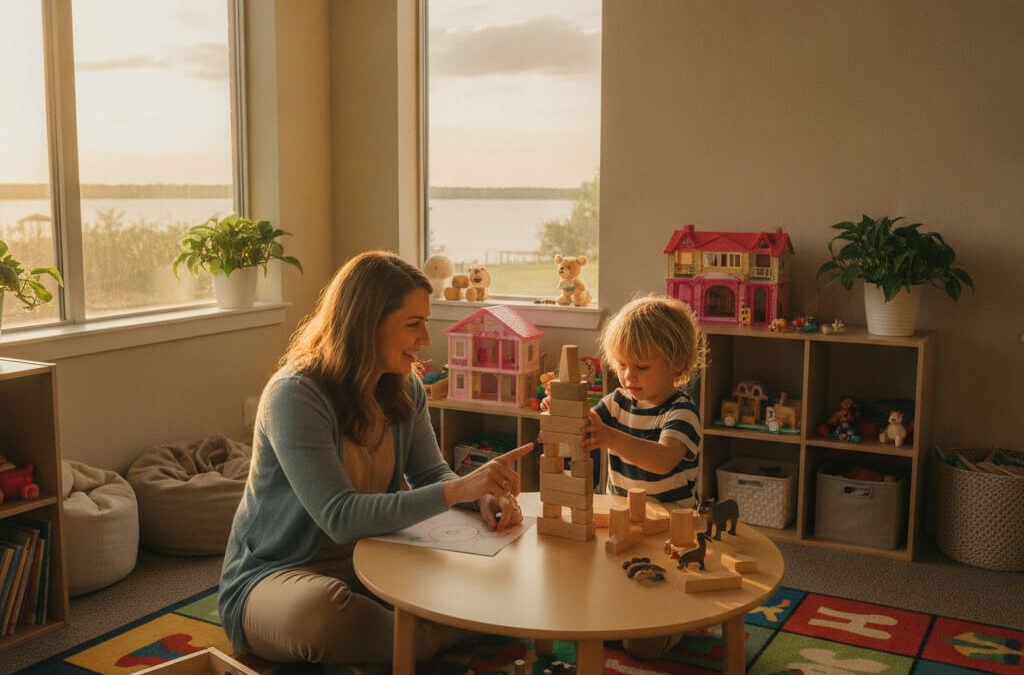
Play therapy is a structured, research-supported approach to child counseling in which a trained therapist uses play, art, and creative expression to help children process experiences and emotions they may not yet have the words to describe. If your child in Rockwall or the surrounding area has been withdrawing, acting out, struggling at school, or showing signs of anxiety or sadness, play therapy may be exactly the kind of support they need. It is not just free playtime. It is purposeful, therapist-guided work that gives children a safe and developmentally appropriate way to work through what is happening inside them.
Why Children Cannot Always Just “Talk About It”
When adults feel overwhelmed, they can often sit across from a therapist and explain what is wrong. Children process the world differently. Their brains, especially before the age of twelve or so, are wired to make sense of experience through action, imagination, and play rather than through verbal reflection. Asking a struggling seven-year-old to describe their anxiety or explain why they are having tantrums every evening puts an unfair cognitive demand on them. They genuinely may not know how to answer, even when something real is causing them pain.
Play therapy meets children at their natural level. A child who cannot say “I feel scared since my parents separated” may show that fear clearly through how they play with dollhouse figures or how they choose to use art materials in a session. A skilled child therapist reads those cues, reflects them back, and gently guides the child toward understanding and healing without ever forcing a conversation the child is not ready to have.
What Happens During a Play Therapy Session?
Sessions typically last forty-five to fifty minutes and take place in a specially designed playroom equipped with sand trays, art supplies, puppets, building materials, and other carefully chosen tools. The therapist creates a warm, nonjudgmental space and follows the child’s lead while maintaining structure and purpose throughout the session.
There are two broad styles your therapist may draw from. In child-centered play therapy, the child directs most of the activity and the therapist reflects feelings and builds the therapeutic relationship. In directive play therapy, the therapist introduces specific activities designed to address a particular goal, such as processing a frightening event or practicing coping skills for anxiety. Many therapists blend both approaches based on what a child needs week to week.
Parents are usually not in the room during sessions, but you are always a crucial part of the process. Your child’s therapist will check in with you regularly, share general progress without breaking your child’s trust, and give you practical guidance you can use at home to reinforce what your child is working on in therapy.
Which Children Tend to Benefit from Play Therapy?
Play therapy is flexible and has been studied across a wide range of childhood challenges. It is commonly recommended for children between the ages of three and twelve, though the approach can be adapted for younger toddlers and older preteens as well. Children who often benefit include those dealing with:
- Anxiety, excessive worry, or fear-based behaviors
- Emotional or behavioral changes following a divorce or family transition
- Exposure to trauma, including accidents, medical procedures, or family violence
- Grief after the loss of a parent, grandparent, sibling, or pet
- Social difficulties or trouble making and keeping friends
- ADHD-related emotional dysregulation and frustration
- Adjustment challenges after a move, a new school, or a new sibling
- Selective mutism or difficulty expressing needs verbally
- The emotional impact of parental conflict or high-conflict custody situations
Rockwall County has grown rapidly over the past several years, and many families relocating from other parts of the Dallas-Fort Worth Metroplex are still building their support networks. Children feel these transitions keenly, even when parents work hard to make moves go smoothly. Play therapy can give a child the grounded, consistent relationship they need while the rest of life is shifting.
Play Therapy and Trauma: What Parents in Rockwall Should Understand
Children who have experienced trauma often carry it in their bodies and behaviors long before anyone realizes what is happening. A child who witnessed something frightening, experienced abuse, or lived through a chaotic home situation may not connect their current struggles to that earlier experience. They may show up as the child who cannot sit still, the child who melts down over small things, or the child who suddenly refuses to go to school.
Play therapy creates a safe container for that material to surface at a pace the child can manage. When a trauma-informed child counselor guides the process, play therapy can gently reduce the emotional charge of difficult memories without re-traumatizing the child. At Counseling for Healthy Minds, our licensed child therapists are trained in trauma-informed approaches and understand how to read what a child is communicating through play, art, and story.
What Is Often Missing from Other Local Counseling Websites
Many counseling practices in the Rockwall area list play therapy as one of their services but provide very little practical information about how it actually works or what parents should expect week to week. That leaves families with a lot of unanswered questions at exactly the moment when they need reassurance the most. Here are the things parents most often want to know but rarely find clearly answered:
How long does play therapy take? There is no universal answer, because children heal at their own pace. A child working through a specific adjustment issue may make meaningful progress in eight to twelve sessions. A child processing complex trauma or ongoing family stress may benefit from a longer course of therapy. Your child’s therapist will set goals with you at the start and revisit progress regularly so you always have a clear picture of where things stand.
Will my child resist going? Some children are hesitant at first, especially if they associate seeing a doctor with something unpleasant. Most children warm up quickly once they realize the playroom is a place where no one grades them, corrects them, or tells them they are doing something wrong. Within a few sessions, many children actually look forward to their appointments.
Do I need a diagnosis before starting? No formal diagnosis is required to begin play therapy. A licensed therapist will conduct an intake and gather information from you about your concerns, your child’s history, and what you are hoping to see change. That assessment guides the treatment plan.
Supporting Your Child’s Therapy at Home
Parents often ask what they can do between sessions to help. The most powerful thing you can do is stay curious and emotionally available. You do not need to press your child for details about what happened in therapy. Instead, follow your child’s lead at home the same way the therapist does in session. Reflect feelings back when your child expresses them. Make space for big emotions without rushing to fix them. Stay consistent with routines, especially for children dealing with anxiety or family transitions.
Your child’s therapist may also suggest family sessions at key points in the process. Family counseling and play therapy can work together naturally, giving both the child and the parents a space to heal and strengthen their connection at the same time.
Frequently Asked Questions About Child Play Therapy in Rockwall
At what age can a child start play therapy?
Most play therapists work with children starting around age three. For very young children, a therapist may incorporate parent-child or family sessions to support the relationship alongside individual play therapy. The approach is adapted based on each child’s developmental stage.
Is play therapy covered by insurance?
Many major insurance plans cover child counseling when provided by a licensed therapist. Counseling for Healthy Minds is in-network with Aetna, Blue Cross Blue Shield, Cigna, Curative, Tricare West, UnitedHealthcare, and UMR. Families with Tricare West coverage, including military and veteran families in Rockwall County, can often access child counseling benefits with minimal out-of-pocket costs. Contact the office and the team will verify your benefits before your first appointment.
Do parents attend play therapy sessions?
In most cases, children meet with the therapist individually while parents wait nearby. Your therapist will schedule regular check-ins with you to share progress and involve you in the treatment plan. Some approaches also include structured parent-child sessions at specific points in therapy.
My child seems fine at home but is struggling at school in Fate. Could play therapy still help?
Yes. Children often hold it together in one environment while struggling significantly in another, especially in high-pressure school settings. If teachers or school counselors have raised concerns, or if you have noticed a pattern tied to school, that is enough reason to seek an evaluation. A child therapist can work with school staff when appropriate to support your child across both settings.
What if my child in Rowlett or Heath cannot come in person?
Telehealth play therapy is available for families across Texas. While in-person sessions are ideal for younger children, virtual child counseling can be an effective option for older children and for families facing scheduling challenges. Evening appointments until 7 p.m. and Saturday availability make it easier to find a time that works without pulling your child out of school.
Taking the First Step Toward Play Therapy in Rockwall
If something feels off with your child and you cannot quite put your finger on it, that parental instinct is worth listening to. You do not need to wait until things get significantly worse to reach out. Early support through child counseling often makes a meaningful difference before patterns become entrenched.
At Counseling for Healthy Minds, we respond to all new inquiries within 24 hours and will match your child with the right therapist based on their age, needs, and your family’s preferences. If faith is important to your family, Christian counseling is available and fully integrated at whatever level feels right for you. If you prefer a secular approach, that is equally welcome here.
Reaching out is simple. Contact us today to share a little about your child and what you are noticing, and we will take it from there. Your child deserves a space where they feel safe enough to heal, and we are here to help make that happen.